
Have you ever thought about how the computers and systems businesses use might change in the next few years? It’s exciting—and a little bit surprising! The way companies build their technology is evolving fast, especially with a big helper called artificial intelligence (AI). When we talk about AI IT infrastructure 2026, we mean the new kind of digital setup businesses will have that uses AI to work smarter and faster than ever before.
This AI-powered infrastructure is like giving the brainpower of a super-smart assistant to all the computers, networks, and cloud services a company uses. It’s not just about making things quicker, but also safer and more reliable. Understanding this change can feel tricky, but it’s really important. For anyone responsible for technology decisions, getting to know how AI will shape IT infrastructure in 2026 means being ready for the future and making sure systems keep running smoothly as AI gets better and smarter.
In this post, we’ll explore how AI is changing the digital backbone of businesses, the main ways AI will help enterprise networks and security, why future-proofing IT with AI is a must, and even how new tech like quantum computing fits into the picture. Let’s dive in and see how AI IT infrastructure will transform the way businesses run in 2026 and beyond.
How AI Will Make IT Infrastructure Smarter and Safer by 2026
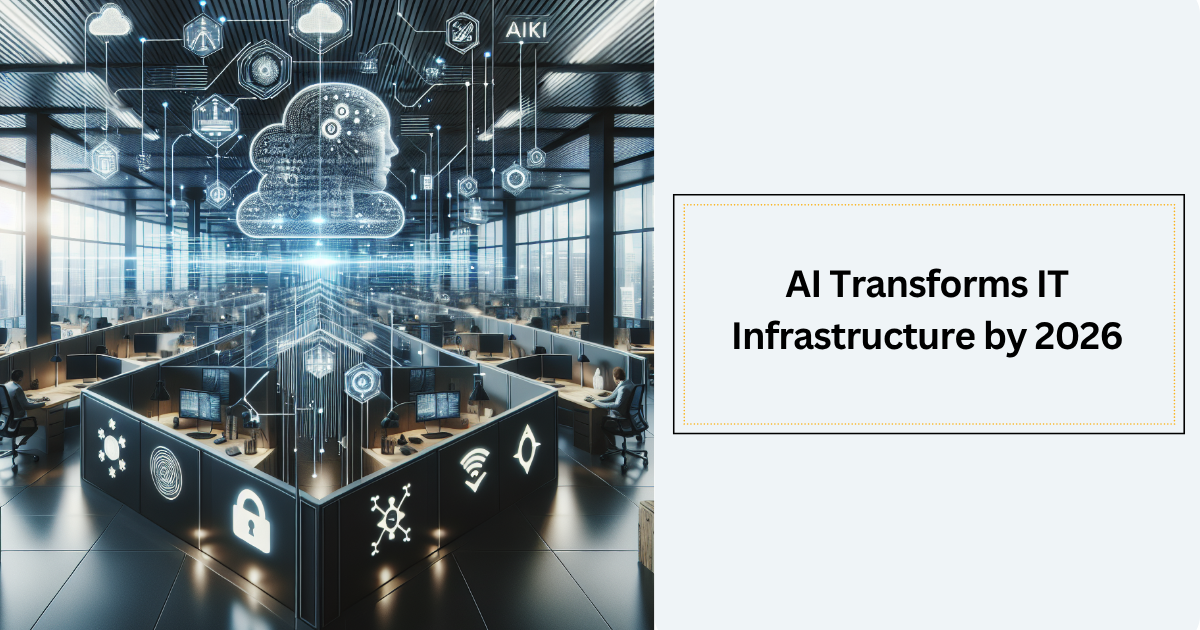
Think of IT infrastructure like the nervous system of a business. It connects all the computers, servers, and networks, helping everything work together. By 2026, AI will act like a supercharged guardian and assistant for this system.
One big change will be network security enhancement. AI will watch over business networks, spotting threats that are sneaky or new. Instead of waiting around, AI can catch problems early, like a guard who never sleeps. For example, AI can look at all the data passing through and notice if something looks fishy, then stop it before any damage happens.
Next is cloud optimization. Many businesses use the cloud—imagine it as a giant virtual warehouse for data and apps. AI will manage these cloud services, making sure resources like storage and computing power are used exactly where needed, without waste. It balances loads so everything runs smoothly, kind of like a helpful traffic officer guiding cars to avoid jams.
Also, AI will enable automated fault resolution. When systems or networks have issues, AI won’t just sound alarms—it will investigate and fix many problems by itself. This lowers downtime so businesses can keep working without annoying interruptions.
These AI capabilities will spread across industries—from healthcare to manufacturing—making digital infrastructure more intelligent and adaptive. If you want to read more on this, check out Coevolve’s research on the top AI use cases for 2026.
Why Upgrading Your IT to Support AI Is a Smart Move
Imagine trying to run a race wearing old shoes. No matter how fast you can run, the shoes might slow you down or cause blisters. The same goes for IT infrastructure in a world powered by AI. Legacy systems, built before AI's rise, might not keep up with AI’s growing needs.
Traditional IT setups can struggle with things like latency, the slight delay that makes fast AI tasks harder; compute intensity, since AI needs a lot of processing power; security challenges; and the need to expand quickly. These issues can make it tough to get the best from AI.
So, future-proof IT is about making smart upgrades that prepare your systems for AI workloads. It means investing in infrastructure ready to handle AI’s complexity securely and efficiently. Many enterprises are already on this path—over 53% have digital transformation plans including AI, according to IDC’s latest report.
Planning ahead like this ensures businesses stay competitive and secure, voting for smart choices today rather than scrambling later.
Six Powerful Ways AI Will Change Enterprise Networking and Security
Some of the coolest AI applications come down to making enterprise networks safer and smarter. Here’s a friendly tour of the top six ways AI is already making a difference and will keep growing in 2026.
Advanced Threat Detection That Works 24/7
Imagine having a spotlight that never turns off, always scanning for dangers. AI monitors network traffic in real time, spotting cyber threats that humans might miss. For instance, Amazon now detects an astonishing 750 million cyber threats every day thanks to AI. That’s a lot of protection from clever hackers.
Business Insights From Mountains of Data
AI helps leaders find hidden patterns in huge piles of data, like a guide reading a map nobody else can see. This helps with planning and spotting trends early. McKinsey notes businesses are rapidly growing their AI use in many functions, showing the value of these insights.
Keeping the Cloud Sharp and Secure
Cloud services are vital but complex. AI watches for unusual activity in cloud environments, managing vendor relations and swiftly detecting data breaches. With data breaches rising, like 64% of organizations seeing more recently (according to Palo Alto Networks), AI-powered cloud security can make a big difference.
Spotting Oddities and Fixing Them Automatically
AI can catch weird behaviors in IT systems and fix problems automatically, reducing downtime. HighRadius is an example where AI lowers false alarms, so teams can focus on real issues quickly.
Intelligent Alerts That Don’t Overwhelm
We all know how annoying too many alerts can be. AI sorts and prioritizes alerts based on importance, so IT teams aren’t swamped. Forbes reports many security pros ignore nearly half their alerts—AI helps cut that number down.
AI Creates Faster, More Efficient Work Environments
By optimizing workflows and servers, AI speeds up processes and improves user experiences. Cloudflare’s AI-enhanced platform secured massive contracts for providing speedy AI services, showing how businesses want this smarter setup.
These examples show just how deeply AI infrastructure is changing enterprise networks and security in 2026.
Balancing Cloud, On-Premises, and Edge for the Best AI Infrastructure
AI IT infrastructure in 2026 won’t just live in one place. It will blend different types of computing to suit various needs. This is known as hybrid AI infrastructure.
Cloud computing provides flexibility and power for tasks that need scaling up quickly or experimenting. It’s like renting a big stadium for a concert—you only pay when you use it.
On-premises computing means having servers right at the company’s location. This works well for steady, heavy workloads where control, security, and cost predictability are important.
Edge computing places computing power near the data source, often to handle instant, time-sensitive tasks like on factory floors or autonomous vehicles. It’s like having a mini assistant right where the action is.
A rising trend is building AI-ready data centers that respect data privacy and sustainability. For example, Danish company Thylander Data Centers focuses on creating such spaces within Denmark to meet local business needs (source here).
Managing this mix is challenging. IT teams need new skills to handle hybrid cloud setups and edge devices effectively. Deloitte highlights how workforce training and operational tools will evolve to keep pace (Deloitte research link).
For insights on integrating AI into business operations, you might also find our post on AI-powered website transformations useful.
Why Quantum Computing Matters for AI IT Infrastructure’s Future
Quantum computing is a new type of powerful computer that works differently than the ones we know now. It’s not common yet, but it’s coming—and it will need special infrastructure to support its sensitive hardware.
Quantum machines require advanced cooling, protection from noise and temperature shifts, and unique data center designs. As AI IT infrastructure evolves by 2026, organizations will need to think about integrating quantum alongside traditional AI workloads.
Deloitte explains that data centers must rethink their layouts and technology to accommodate this future (Deloitte quantum insights). Planning for quantum readiness today is part of future-proofing your AI infrastructure.
Keeping an Eye on AI Risks While Embracing Its Benefits
While AI brings amazing possibilities, it also introduces risks. Some threats are actually made worse because AI can be used by bad actors to create smarter cyberattacks, spread misinformation, or invade privacy.
There have been AI mishaps—like Microsoft’s chatbot accidentally suggesting wrong actions or AI customer service bots needing more human handoffs—showing that AI isn’t perfect (source CIO article).
Because of this, risk management is a crucial part of any AI IT infrastructure plan. Enterprises must layer security, governance, and careful oversight with their AI solutions. They also need to bridge talent gaps and handle infrastructure complexity to keep systems safe and effective.
Smart Tips for CIOs: Leading AI IT Infrastructure in 2026
If you’re a CIO or IT leader, your role is at the heart of making AI IT infrastructure work well and safely.
The first step is to have a clear strategy that matches AI infrastructure upgrades with business goals. Investing smartly in hybrid AI infrastructure and training teams to manage it is key.
Security also needs to be front and center. Use AI tools for real-time threat detection and intelligent alerting to stay ahead of risks.
Think about new tech, like quantum computing, before it arrives, and pick trusted partners that offer AI-optimized network and cloud services like SD-WAN or Secure Access Service Edge (SASE).
Leading research from Coevolve and Deloitte offers valuable insights on combining AI with resilient, future-ready digital transformation (Coevolve insights, Deloitte research).
By balancing innovation with security and strategic planning, CIOs can build AI IT infrastructures that drive smarter, faster, and safer enterprises.
Looking ahead, this is the kind of leadership that will make the business world a better place.
AI IT infrastructure 2026 is no longer just a tech term. It’s the foundation for businesses to grow, adapt, and thrive in a rapidly changing world. Embracing AI infrastructure means giving your enterprise a stronger, smarter backbone that’s ready to handle challenges and grab new opportunities.
Taking small steps to learn, plan, and partner with the right experts will set you on the right path. Think of it as future-proofing your business’s brain and heart. Ready to explore how AI can transform your IT infrastructure? It’s time to start building that future today.